%20(1).png)
Luxury hotel photography today goes far beyond architecture. This article breaks down the key skills—from interiors and lifestyle to food, video, drones, and marketing—that modern hotel photographers need to succeed.
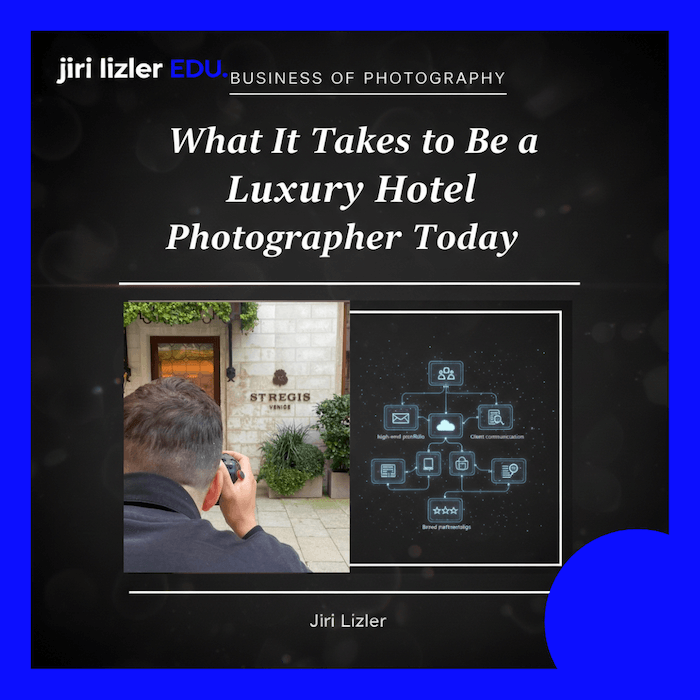

In the past, hotel photography was primarily about the precise capture of architecture and interiors.
However, with the growing emphasis on lifestyle marketing and a more personal approach, the expectations placed on hotel photographers have changed significantly. Today, hotel photography is about far more than technical perfection. It is about a shift in mindset—approaching each project individually and understanding the specific needs of the hotel and its sales and marketing departments.
Below is an overview of the skills you need in order to succeed as a luxury hotel photographer.
As you will see, the list keeps growing. That said, the decision of what you will and will not photograph is entirely yours. You can always say no—but someone else may say yes. The question is whether you choose to photograph everything yourself or prefer to recommend another specialist.
Luxury hotel photography requires careful planning and absolute technical control.
Minimizing distortion means reducing perspective and lens distortion when photographing interiors and exteriors. This is achieved through proper lens selection and correct camera positioning to preserve the most accurate representation of the space. Although it may seem obvious, maintaining perfectly straight vertical lines is still a challenge for many photographers.
This is where fans of ultra-wide lenses may be disappointed—wide lenses will not get you far here.
Precise lighting control is essential for creating the right atmosphere. A photographer must be able to work with multiple light sources and intensities so that key architectural and design elements stand out—without it being obvious at first glance that the space has been artificially lit.
This is where atmosphere and interior details come into play—often referred to as USPs (Unique Selling Points). Interior photography must show how the space is used while highlighting its design features.
Lighting mastery is critical. Correctly lighting individual areas allows key elements to stand out and helps create images that feel alive and inviting. This is where meticulous staging comes in—every centimeter matters, and even the smallest adjustment can significantly affect the final image.
Often, you must show the very best of a space in a single photograph—while still adhering to brand guidelines and capturing everything the hotel requires.
Food and drink photography requires the ability to create visually appealing and mouth-watering images. Careful attention to composition, lighting, and styling is essential.
Food photography often requires different equipment and lenses than interior photography.
In hotel environments, food imagery is usually divided into two categories:
Lifestyle photography must convey the atmosphere and emotional experience of the space—from relaxing moments in a hotel bar to tranquil wellness areas.
Working with models, makeup artists, and stylists is essential to creating images that feel authentic while still reflecting the desired aesthetic and brand identity of the hotel. You must be able to clearly communicate both your own vision and the hotel’s vision so the entire team is aligned.
Most often, this involves photographing chefs, models, wellness staff, and bartenders.
Destination photography should capture the charm and appeal of the location itself. Creating these images requires the ability to communicate what makes a destination unique and inspiring.
Planning is crucial—knowing when and where to shoot, and ideally avoiding tourist crowds. Destination shoots are often welcomed, as they provide the rare opportunity to explore beyond the hotel and experience the country itself.
Videography has become an increasingly important tool in the promotion of luxury hotels. The ability to create engaging videos that convey atmosphere and a sense of luxury is highly valuable.
Personally, I tend to avoid large-scale video productions, as hotels often choose specialized video teams for that. However, short promotional videos are frequently requested.
Drone photography and videography are another growing trend in hotel marketing. Aerial perspectives offer unique viewpoints that can strongly engage the target audience. Here, it is essential to manage flight permits, licensing, and local drone regulations properly.
Communicating and presenting your work effectively is essential for acquiring new clients. The ability to communicate in multiple languages expands your market and allows you to work with international clients.
Strong communication skills are also critical for successful negotiations and long-term business relationships. When people ask me how many languages a hotel photographer needs, my answer is simple: so far, English has been enough. Without English, I would say it is nearly impossible to succeed internationally.
As you can see, this is a highly complex set of skills. I am not claiming to have mastered everything perfectly, but I continuously work on improving and refining my craft.
How about you?
What does your range of experience and skills look like?