%20(1).png)
Barter in photography can open doors — or quietly devalue your work. Based on real experience, this article explores when barter makes sense, where it fails, and how to protect the long-term value of your photography.
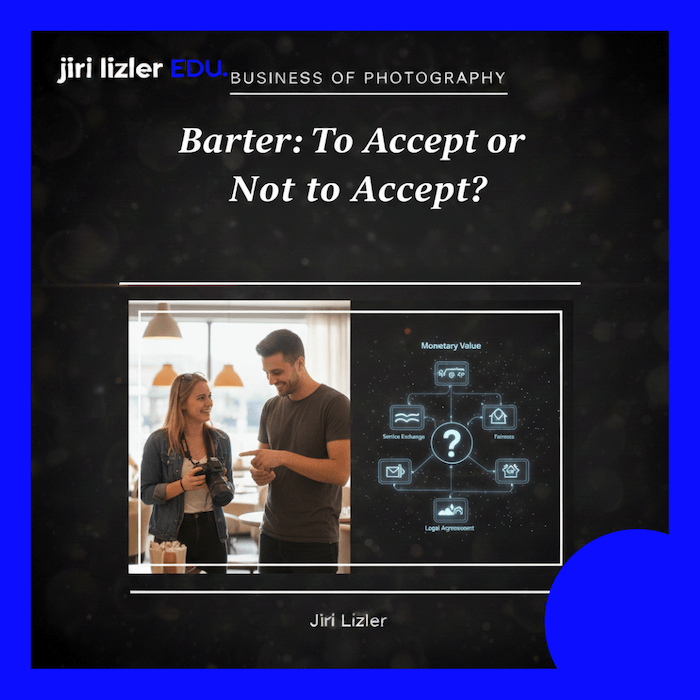

Today, I want to take a deeper look at the topic of barter within the photography industry. Is it beneficial? What are the advantages and disadvantages? I will share my personal experience and the lessons I have learned over the years.
Barter—defined as the exchange of services without direct financial payment—is a frequently discussed topic in photography. For many photographers, barter can appear to be a gateway to new opportunities and portfolio growth. However, let’s be honest: it is far from a flawless system. More often, it is a complex terrain filled with hidden pitfalls.
Barter is rarely just a simple exchange of services. It carries deeper implications. While it can offer potential opportunities, it can also lead to the undervaluation and devaluation of a photographer’s work if not approached carefully.
My personal perspective on barter has evolved significantly. Like many photographers, I started as an enthusiastic beginner and accepted almost every offer that came my way. At the time, I saw barter as a chance to improve my skills and build my portfolio.
Over time, however, I began to experience the darker side of this model. I found myself in situations where, instead of receiving fair compensation, I was offered “exposure” or a trade for something that should have been paid work. That taught me a critical lesson: learning to say no to offers that undermine the value of my work.
Those who have followed my work for a while know that I evaluate most offers based on three core criteria:
Ideally, a project fulfills all three. Realistically, that is not always possible. However, if a project strongly fulfills at least two out of three—typically opportunity and portfolio value—I am willing to consider it, even if the fee is zero or purely symbolic.
What matters most is long-term value. If a barter deal creates a genuine opportunity or adds meaningful weight to my portfolio, it may be worth considering. If it is merely a short-term exchange with no lasting benefit, I usually decline.
In many cases, barter requests are simply another way of saying: “I need photos, but I don’t want to pay for them.” That mindset often signals a lack of respect for the photographer’s work.
One important reality must be acknowledged:
If you photograph something for a client for free, you should assume that this client will never become a paying client.
In my experience, I have never seen a consistent transition from free barter work to properly paid assignments with the same client. This does not mean barter is always wrong—but expectations must be realistic and aligned with your personal goals.
Additionally, we must address the broader issue of market erosion. Consistently working for free contributes to the degradation of pricing standards across the industry. That path leads nowhere good.
That said, if you are pursuing very specific and strategic goals—for example, showcasing your work to a major corporate client—and it is a one-time exception, then yes, it can make sense. The key is clarity of intent and strict boundaries.
Within hotel photography, there is one important distinction I want to make very clear:
Accommodation and meals are not barter.
Providing lodging and food is a basic operational responsibility of the hotel during a shoot. These should never be framed as compensation, nor should they be used to justify lowering the photography fee.
The only exception is when you intentionally extend your stay for personal reasons—such as turning part of the trip into a family vacation. We occasionally do this ourselves, perhaps once a year, by staying longer at our own expense. That is a personal choice and entirely separate from the professional agreement.
Another crucial factor is recognizing the value you bring as a photographer. I am committed to protecting that value and seeking collaborations that genuinely respect my work.
If I expect clients to respect my professionalism, craft, and reputation, I must uphold those principles consistently in my own decision-making.
Barter can be a valuable opportunity—especially for photographers at the beginning of their careers—but like any business transaction, it requires careful consideration. Over time, I have learned to evaluate offers through the lens of my long-term goals, not short-term convenience.
When a barter discussion arises, my process is straightforward:
Transparency is essential. Ambiguity is where most barter deals fail.
Every photographer is different. Values, priorities, and career stages vary widely. What works for me may not work for someone else. However, it is essential to have a clear understanding of your own value and to pursue collaborations that respect it.
How does this business model affect you as a photographer?
How do you handle barter offers, and what have your experiences been?
These are questions worth revisiting regularly as your career evolves.